How to Compare Two Microcurrent Devices
Compare suitability, controls, compatible products, evidence, and total cost. A higher intensity range is not a shortcut to choosing the better device.
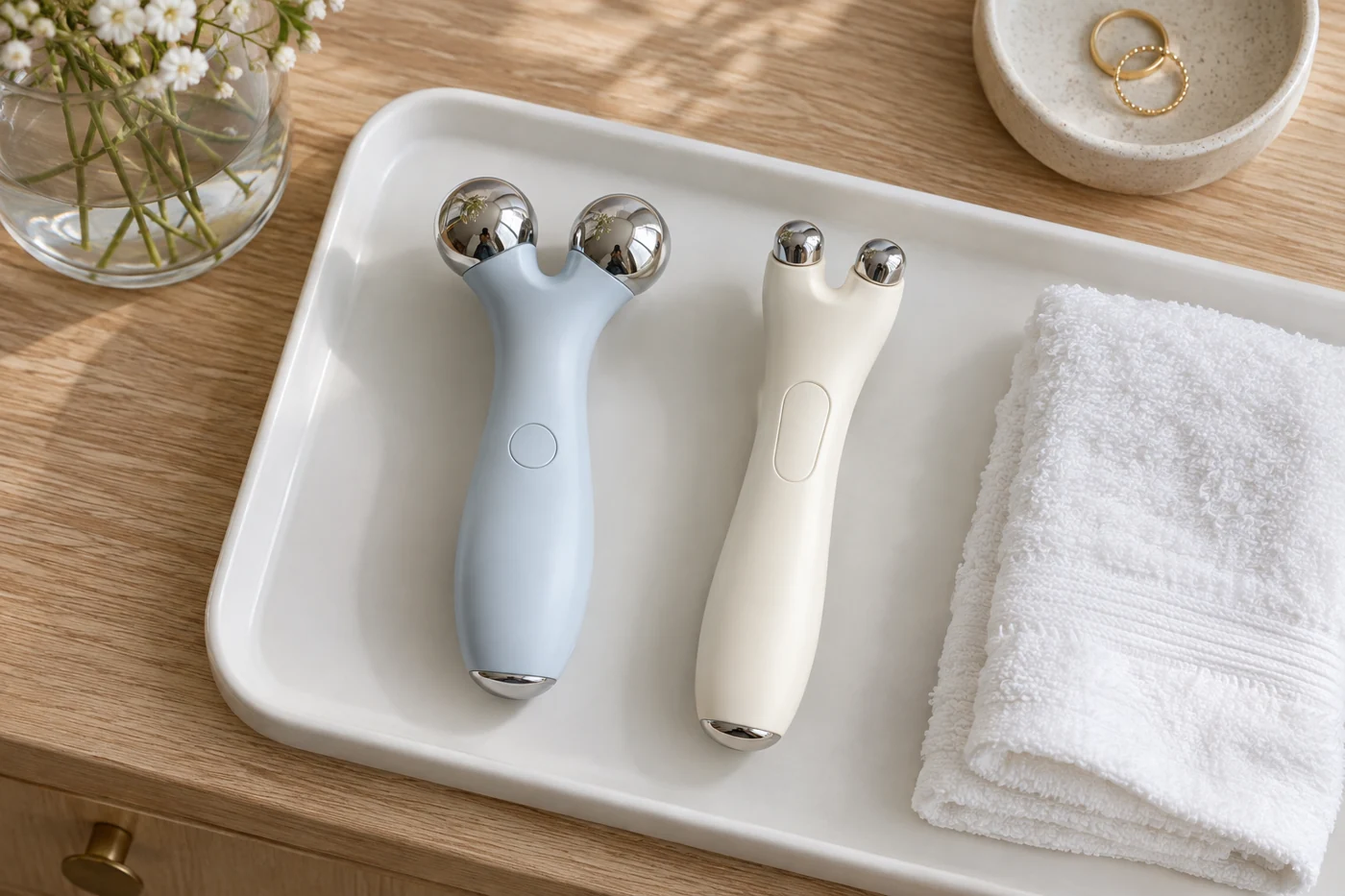
Put two microcurrent devices side by side on a shopping screen and the comparison can quickly become a contest of settings, modes, and technical language. A more useful comparison begins with what you can verify: exact model, intended use, suitability warnings, routine requirements, and support.
Create one page with a column for each device. Add a third space for unanswered questions. Do not give an unknown feature the benefit of the doubt simply because one product's advertising sounds more confident.
Start with whether either device is appropriate
Read both manuals in full before comparing price. Exclusions and precautions may concern medical conditions, implanted equipment, pregnancy, procedures, and particular body areas. If a warning applies, that model should not remain in consideration on the basis of a sale price or more comfortable handle.
For personal medical questions, take the exact instructions to an appropriate clinician. The two products may share the term microcurrent while differing in important details. Do not use a general answer about the technology to override a specific restriction.
Compare the routine you would actually follow
Record the permitted treatment areas, session schedule, and required conductive medium. Note the preparation and cleanup, not just the powered portion of a session. Find out whether the device needs an app to activate, select settings, or run the intended routine.
Consider grip and control access. A pair of contact points that looks comfortable in a photograph may feel different in a smaller hand. Look for dimensions, weight, and demonstrations that show the whole tool rather than only a close-up of its surface.
Intensity ranges need context. Numbers from different manufacturers are not automatically comparable, and a larger range does not establish better results. Avoid choosing the strongest-sounding device as though you were comparing a basic household motor.
Separate evidence from vocabulary
Look for information supporting the exact claims made for the product. Does a cited study involve the model being sold or merely a related technology? What outcome was measured, and over what period? A branded name for a waveform or mode is not itself evidence of an advantage.
Record uncertainties honestly. If you cannot establish that two claims use the same measurement, do not rank them as if they do. A qualified professional may help interpret relevant evidence, but a buying worksheet should not invent scientific certainty.
Add up the less visible costs
List the initial package contents, compatible product refills, replacement accessories, shipping, and any required software charges. Use ordinary refill prices and a realistic usage assumption. A generous introductory bundle can conceal the ongoing cost of the routine.
Read the warranty, servicing process, and retailer return terms. Check who handles support and whether your location affects service or shipping. Save the exact listing and any written answers that influence your choice.
Finally, write one sentence explaining why each device remains on the shortlist. If the reason is mostly that it has more modes or a bigger discount, revisit the practical comparison. A useful purchase is one you can use appropriately, maintain, and afford without expecting the technology name alone to guarantee an outcome.
Continue exploring

Choosing a Beauty Device You Will Actually Use
Start with an ordinary week, not an ideal routine. Match the device’s preparation, care, and costs to the way you already live.
Keep reading: Choosing a Beauty Device You Will Actually Use
Questions to Ask Before Buying a Facial Cleansing Tool
Use a short set of questions to compare the real routine: suitability, pressure, cleanser compatibility, maintenance, and replacement parts.
Keep reading: Questions to Ask Before Buying a Facial Cleansing Tool