Questions to Ask Before Buying a Facial Cleansing Tool
Use a short set of questions to compare the real routine: suitability, pressure, cleanser compatibility, maintenance, and replacement parts.

Before choosing a facial cleansing tool, ask whether you want a tool at all. If washing with your hands already feels comfortable and works with your routine, the purchase is optional. A device should have a clear place in your day rather than becoming a response to every normal pore or patch of texture.
Then move from the broad category to an exact model. A manual pad, a silicone powered device, and a brush with removable heads are different ownership decisions. Comparing them only by price or color leaves out most of what you will do after the box arrives.
What will change at the sink?
Find the manual and identify preparation, movement, pressure, and session limits. Does the tool require makeup removal first? Is your existing cleanser compatible? Can the controls be understood without repeatedly checking a phone? These are questions to answer from the instructions, not assumptions to carry from another product.
Check the warnings for your circumstances. If your skin is already irritated, or you have a condition or recent procedure mentioned in the manual, seek appropriate advice before use. A product labeled gentle is not a personal assessment of suitability.
What will change after the session?
Look at the cleaning method and drying arrangement. Can you follow them in your bathroom without using unsuitable household cleaners or storing the tool damp? A product's surface material alone does not tell you whether its whole body can be rinsed or soaked.
If a head needs replacement, find the exact part and its current price. Check whether it is readily available from a reliable seller. A low initial price is less appealing if ongoing parts are difficult to identify or expensive to obtain.
What would make you regret the purchase?
Think about the handle, footprint, noise information, app requirements, and charging accessories. Look for specific evidence rather than assuming that a compact-looking photograph means a small device. Ask the seller about unresolved details before paying.
Read return conditions for opened personal-care products and save the listing. If the product arrives incomplete or different from what was described, the order record will be useful.
Finish with a simple comparison: current cleansing routine, new tool routine, and added cost. If the benefit you hope for remains vague while the extra work is clear, wait. You can return to the decision later without treating an optional accessory as a missing foundation of skin care.
Continue exploring

Choosing a Beauty Device You Will Actually Use
Start with an ordinary week, not an ideal routine. Match the device’s preparation, care, and costs to the way you already live.
Keep reading: Choosing a Beauty Device You Will Actually Use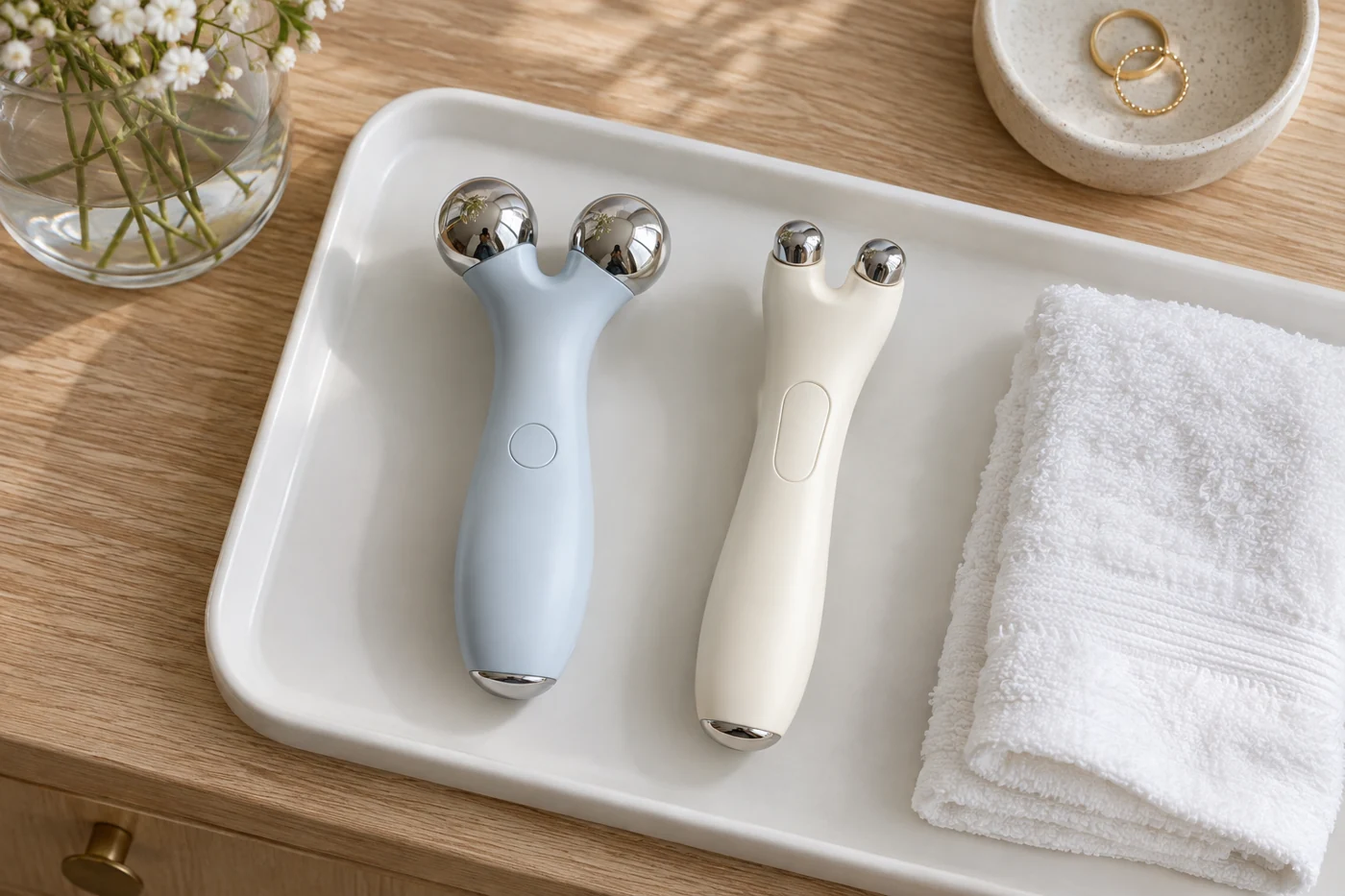
How to Compare Two Microcurrent Devices
Compare suitability, controls, compatible products, evidence, and total cost. A higher intensity range is not a shortcut to choosing the better device.
Keep reading: How to Compare Two Microcurrent Devices