What a Skin-Care Patch Test Can Tell You
A small-area product check can reveal some tolerance problems, but it is different from medical allergy patch testing.
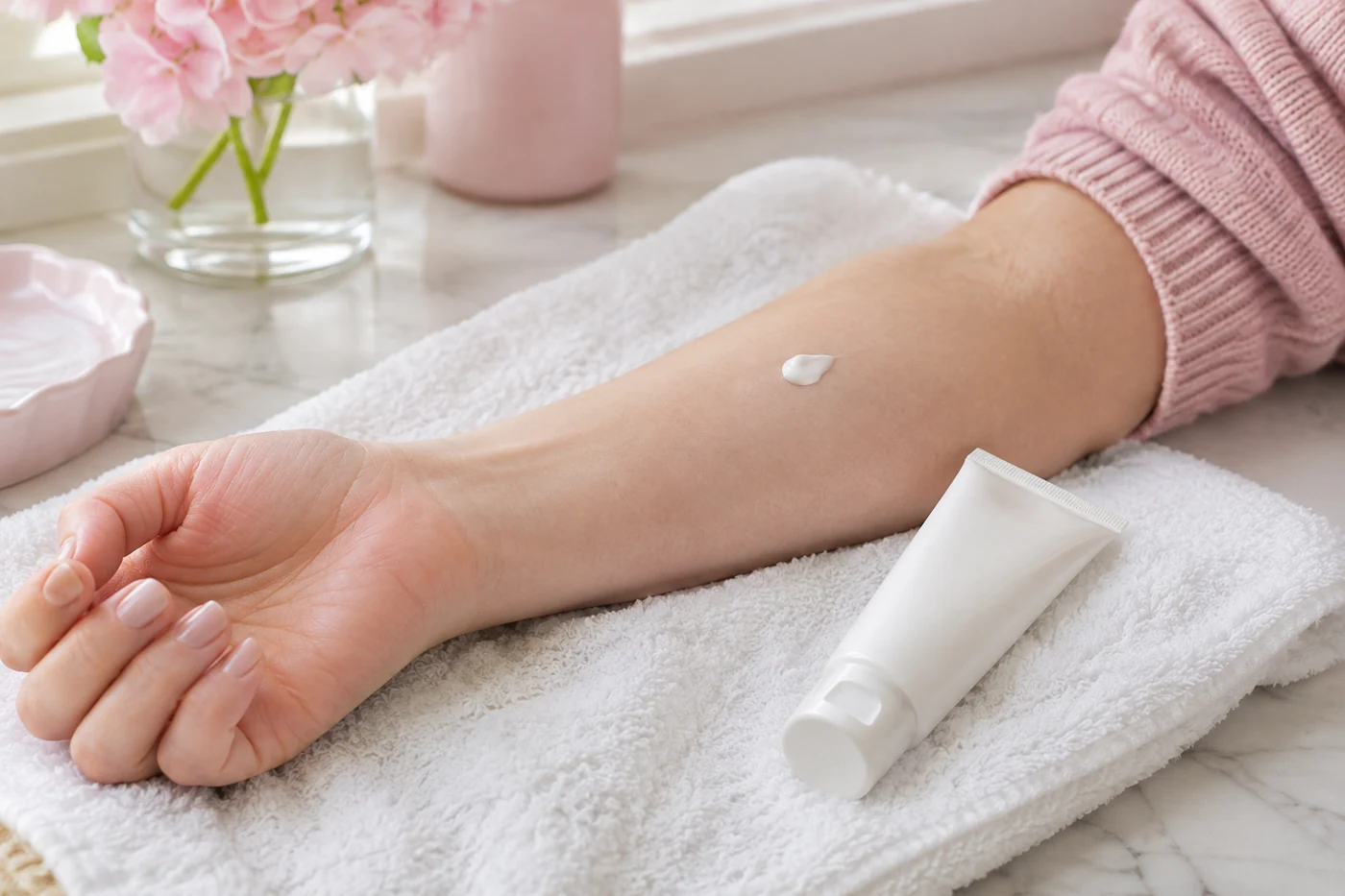
The phrase “patch test” is used for two different things. In everyday beauty advice it often means trying a small amount of a product on a limited area of skin. In a medical setting, patch testing is a structured investigation used to help identify causes of allergic contact dermatitis. A successful home check is not a certificate that you have no allergy.
Keeping that distinction in mind makes the advice more useful. A home product check is one cautious step before putting something new over a larger area. It does not diagnose the cause of a previous rash, establish that two products work well together, or prove a product will produce its advertised result.
Use a method rather than a quick dab
The AAD's instructions for testing skin-care products describe repeated use on a small test area over seven to ten days. Rinse-off products should not simply be left on all day. Their directions still apply.
Choose a time when you can pay attention to the same area and keep a note of which product you used. A brief application at a shop counter tells you something about immediate feel, but it is not equivalent to observing repeated use. Avoid testing several unfamiliar products in the same place because you will lose track of which one you are observing.
Keep the original container nearby so the name, ingredients, and instructions remain available. If you receive an unlabelled sample, ask for those details before trying it. “The pink cream” is not enough information if you later need to contact the manufacturer or a dermatologist.
Understand the limits
Skin in one location is not identical to skin everywhere else. Passing a small-area check does not authorize use near the eyes if the label excludes that area. Nor does it override warnings about damaged skin or a known ingredient allergy.
If you notice a reaction, stop the trial and gently remove the product. Do not keep challenging the same spot to see whether you can become used to it. Get medical advice when symptoms are substantial, persistent, or difficult to interpret. Breathing difficulty or rapidly developing swelling calls for urgent medical attention.
Bring evidence to a professional assessment
For recurring reactions, save the product name, ingredient list, and a short account of when the problem appeared. A clear photograph can help document something that has faded by appointment day. Include other products used on the same area rather than assuming that the newest bottle must be responsible.
Medical patch testing may be appropriate in some situations, but that decision belongs with a clinician. A careful home check is best understood as a limited screening habit, not a substitute for investigating a troublesome skin reaction.
Continue exploring

A Gentle Cleansing Routine for Busy Evenings
Keep the evening wash manageable with a familiar cleanser, a light touch, and a place for everything you use.
Keep reading: A Gentle Cleansing Routine for Busy Evenings
Choosing a Moisturizer by Texture, Not Hype
Compare the feel, packaging, and place of a moisturizer in your day before focusing on the fashionable ingredient on the front.
Keep reading: Choosing a Moisturizer by Texture, Not Hype