Comparing Facial Rollers by Shape and Material
Focus on grip, smoothness, moving parts, and care. A stone name or luxury finish does not establish a lasting cosmetic benefit.
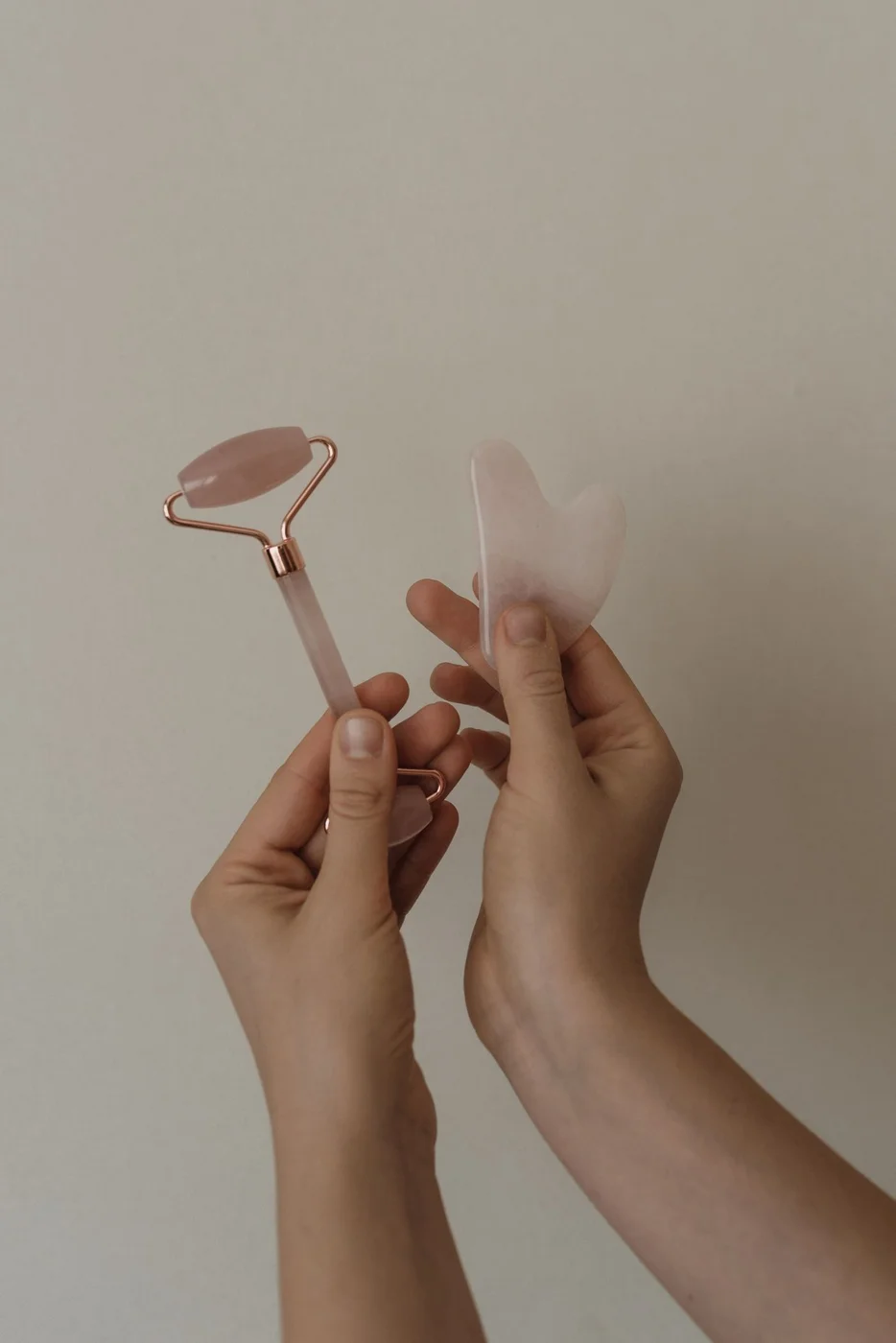
A facial roller display can turn quickly into a catalog of stones and colors. Before comparing those labels, decide whether you want a manual massage accessory and how you would care for it. The material name does not, by itself, tell you how the tool will feel in your hand or support a claim about lasting changes to your face.
Compare the actual construction. Look at the handle length, roller size, frame, and the way the moving part is attached. A double-ended design adds flexibility only if both ends have a purpose you understand and are permitted for the areas you intend to use.
Grip and movement
A smooth handle may look elegant but be harder to control with product on your hands. Consider its thickness and shape, not just the roller itself. If you can inspect a display safely without applying it to your skin, notice whether the roller turns freely or catches.
Check for rough edges, chips, cracks, and loose fittings. A low price is not a bargain if the contact surface is damaged or poorly finished. The same inspection matters for an expensive tool; decorative packaging does not replace construction quality.
Material and maintenance
Read the cleaning instructions for the complete tool. Stone, metal, coatings, and adhesives may have different care requirements. Do not assume a material can be soaked, boiled, or exposed to strong cleaners because another roller can.
If cooling is part of the advertising, check whether the maker permits refrigerated storage and how it should be used. Do not improvise freezer storage or extreme temperatures. A roller can be considered at an ordinary comfortable temperature without making cold exposure the main feature.
Claims and cost
Separate the experience of gentle massage from claims about detoxification, permanent sculpting, or treating a skin condition. Ask what evidence supports the exact claim rather than assigning special properties to a color or stone name.
Compare what you receive: the tool, a case if useful, clear care instructions, and a seller who can answer questions about defects. A case matters only if it protects the tool after appropriate cleaning and drying; it is not proof of better performance.
Choose a roller you can handle gently and maintain without fuss, or leave it off the shopping list. A simple manual accessory does not need an elaborate material story to justify a place in a routine.
Continue exploring

Choosing a Beauty Device You Will Actually Use
Start with an ordinary week, not an ideal routine. Match the device’s preparation, care, and costs to the way you already live.
Keep reading: Choosing a Beauty Device You Will Actually Use
Questions to Ask Before Buying a Facial Cleansing Tool
Use a short set of questions to compare the real routine: suitability, pressure, cleanser compatibility, maintenance, and replacement parts.
Keep reading: Questions to Ask Before Buying a Facial Cleansing Tool