Rechargeable and Battery-Powered Beauty Tools
Compare the power arrangement with where you will use the tool, how parts are replaced, and what happens at the end of its life.
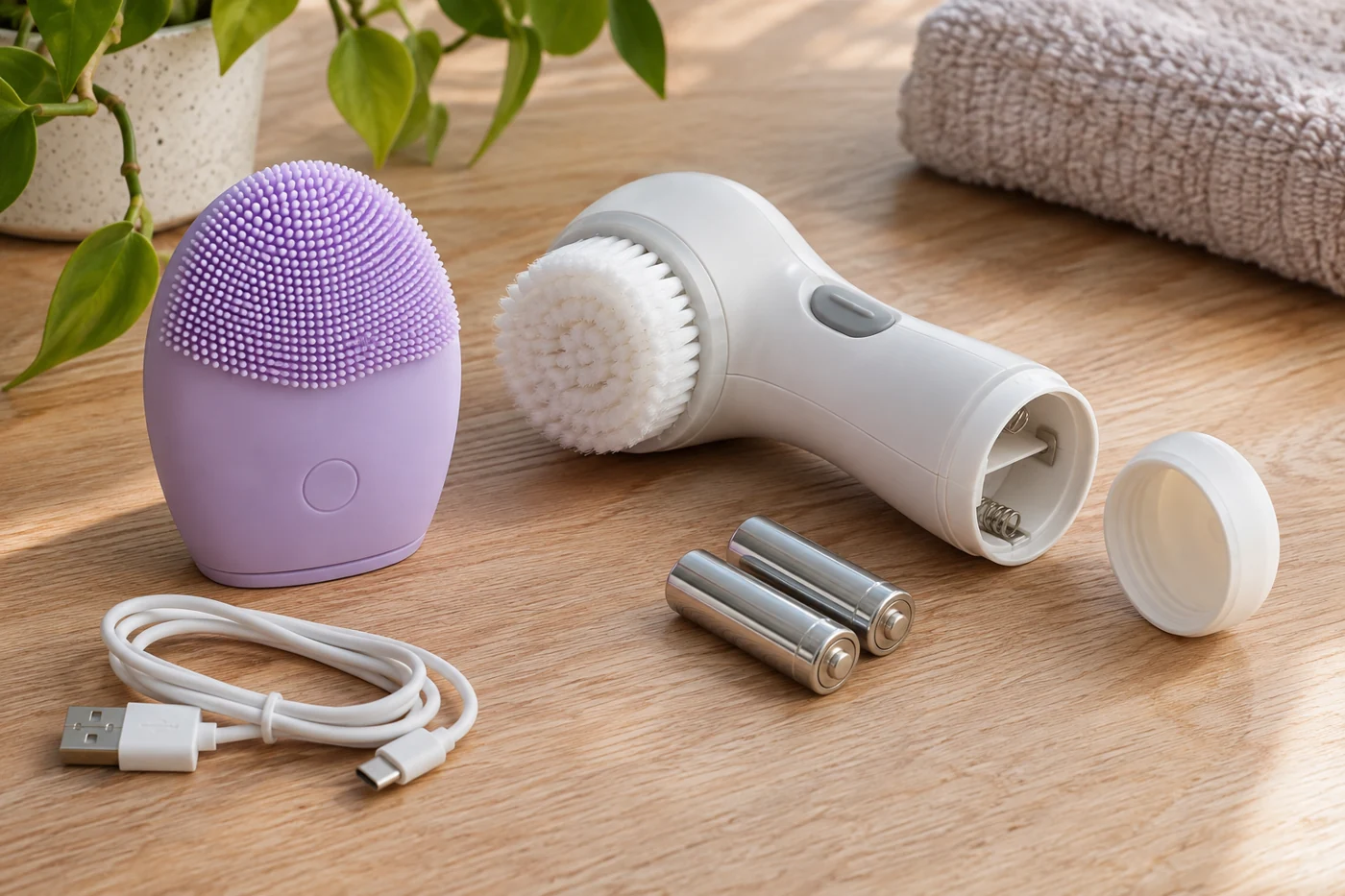
Rechargeable and replaceable-battery beauty tools solve different practical problems. One asks you to keep a charger available; the other asks you to keep the correct batteries available. Neither arrangement is automatically more convenient for every bathroom or travel routine.
Begin with the exact model's instructions. Identify the battery type, charging requirements, and whether any battery is user-replaceable. A sealed rechargeable product should not be treated as a do-it-yourself battery project simply because the cell eventually wears out.
Picture a normal month
For a rechargeable tool, consider where it can charge safely and whether the cable or dock is easy to store. Check the stated charging indicators and any restrictions on use while connected. A claim about many uses between charges should be read with the manufacturer's assumptions about mode and session length.
For a replaceable-battery tool, note the required battery type and whether it is included. Read the guidance about insertion, removal, long periods without use, and disposal. Do not mix battery types or make substitutions outside the instructions merely because they fit the compartment.
Include travel and infrequent use
A compact device may still require a bulky charging accessory. A battery-powered model may be easier to pack but require spare batteries appropriate for the journey. Check official airline and security rules for the actual battery and device rather than relying on a seller's travel-friendly label.
If you use the tool rarely, review storage instructions and how you will know it is ready when needed. A product left forgotten in a drawer can be inconvenient regardless of its power system.
Look beyond the next charge
Ask whether replacement charging accessories or authorized battery service are available. Add the likely cost of replacement batteries or necessary accessories to your comparison. Avoid making a precise lifetime prediction from a promotional runtime claim.
Think about disposal before a fault occurs. Electronics and their batteries may require separate collection under local guidance. A sealed design changes how you hand over the item, not whether you should improvise dismantling it.
Choose the power arrangement that you can maintain without awkward charging, uncertain replacements, or a pile of incompatible cables. The most useful feature is often a clear, supported routine rather than the longest advertised battery life.
Continue exploring

Choosing a Beauty Device You Will Actually Use
Start with an ordinary week, not an ideal routine. Match the device’s preparation, care, and costs to the way you already live.
Keep reading: Choosing a Beauty Device You Will Actually Use
Questions to Ask Before Buying a Facial Cleansing Tool
Use a short set of questions to compare the real routine: suitability, pressure, cleanser compatibility, maintenance, and replacement parts.
Keep reading: Questions to Ask Before Buying a Facial Cleansing Tool