Cleaning a Facial Device Without Damaging It
Clean the contact surface after use using the method for that model. Strong household disinfectants are not a shortcut to compatible care.
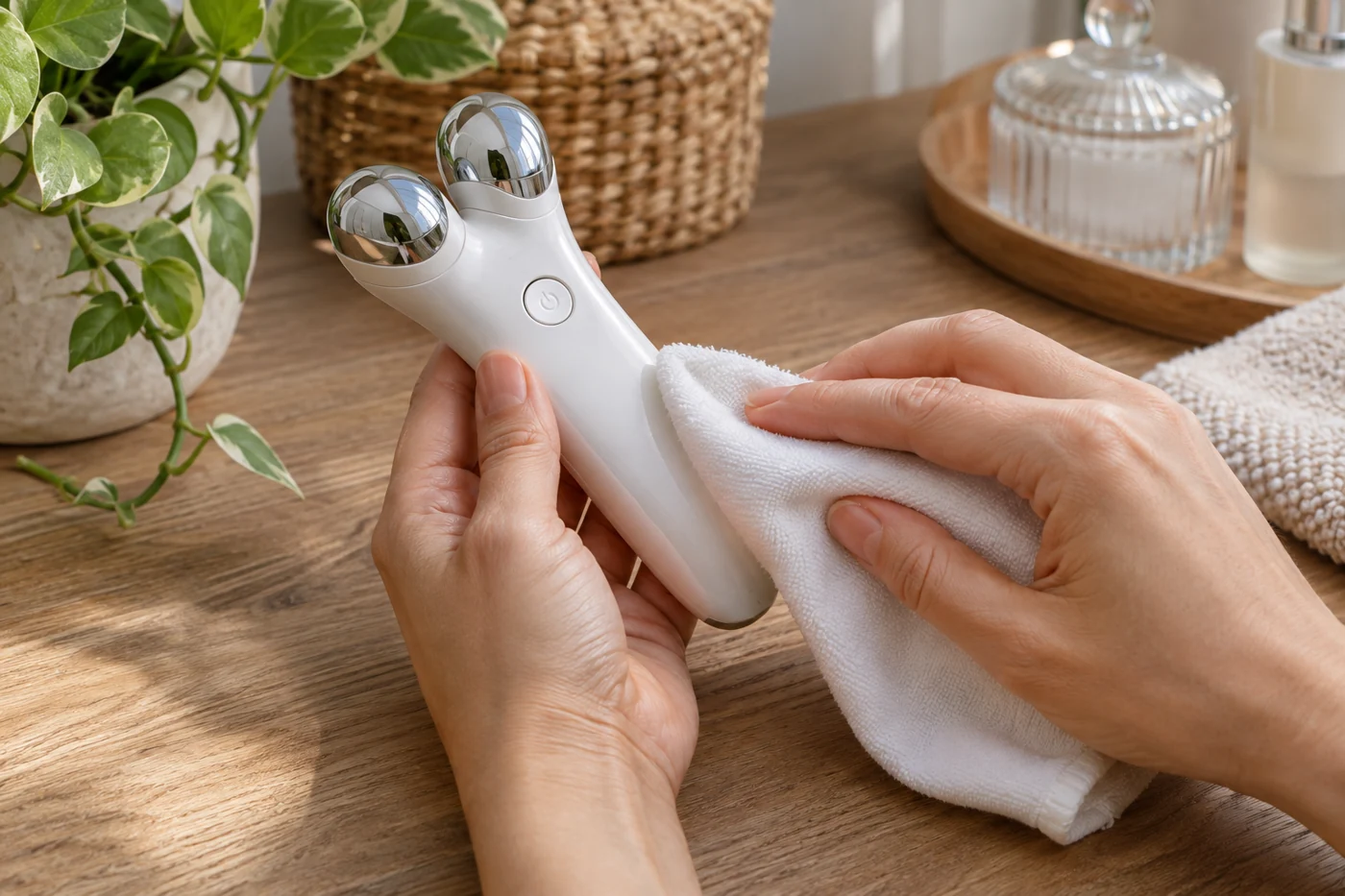
The moment after a facial-device session is an easy point to rush. There may be cleanser around a seam, a slippery contact surface, and a towel already waiting. Putting the tool away now and promising to clean it later turns a short finishing step into a less appealing job the next time you want to use it.
Set up a cleaning routine that belongs to the exact device. Read which parts can be washed, what product may be used, and how the tool should be dried. A manual brush, a silicone electronic tool, and a device with metal contacts should not automatically receive the same treatment.
Start with the allowed method
Use the cleaning instructions supplied by the maker rather than choosing the strongest cleaner in the cupboard. Alcohol, solvents, abrasive powders, and household disinfectants may be unsuitable for a device surface even when they are useful elsewhere. Boiling, dishwashing, and soaking are also choices that require explicit permission, not common-sense upgrades.
If residue remains after the approved steps, ask support for advice. Do not scrape between contact points with a sharp object or force a part off because it appears detachable. Small damage can create a different problem from the residue you were trying to remove.
Pay attention to detachable pieces
Check whether a head, ring, or cap is meant to be removed for cleaning. Put small pieces somewhere they cannot fall down the drain. Notice their orientation before taking them apart so you can refit them without guessing.
Wash and dry those components only as directed. Keep the main electronic body away from any cleaning process that is approved solely for a removable piece. A diagram in the manual is often clearer than a brief sentence on the box.
Make drying visible
Choose a clean resting place where the device will not sit in leftover water. A damp folded cloth beneath it can defeat the purpose of leaving it out. Once dry, move it to its storage position without letting the treatment surface rub against loose cosmetics or dirty tools.
Before charging, recheck the manufacturer's drying requirements for the connection and body. Do not treat a surface that feels dry at one point as proof that every recess is ready for a power connection.
An effective routine is repeatable: approved cleaning, appropriate drying, a quick look for damage, and suitable storage. Keep the necessary supplies close enough to use but separate from products meant for household surfaces. If a tool is too awkward to clean reliably, that inconvenience is worth considering when you decide whether it belongs in your routine.
Continue exploring

Before Your First Facial Cleansing Device
A facial cleansing tool is an optional addition. Start with the manual, a compatible cleanser, and a plan for keeping the tool clean.
Keep reading: Before Your First Facial Cleansing Device
Silicone and Bristle Cleansing Tools: Everyday Differences
The surface material is only part of the decision. Consider drying, replacement parts, grip, and how the whole tool fits beside your sink.
Keep reading: Silicone and Bristle Cleansing Tools: Everyday Differences