Reading Device Warnings Before You Buy
Warnings can determine whether a device belongs on your shortlist. Read them while returning a product is still hypothetical.
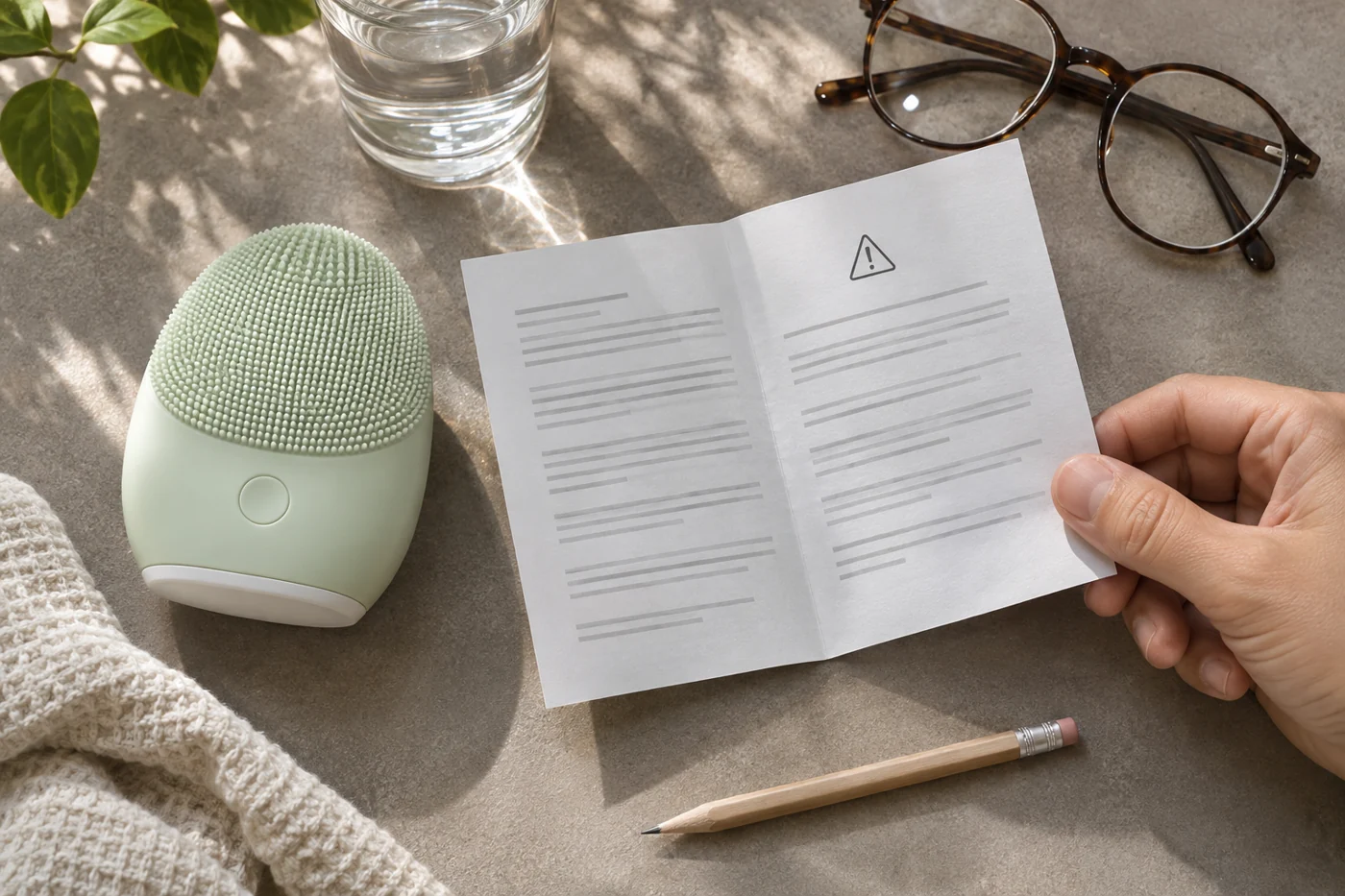
The most useful time to read a beauty-device warning is before the purchase. By the time a parcel arrives, excitement and the effort of returning it can make an unsuitable product feel harder to set aside. Put the full manual beside the product page while you are still comparing options.
Start with the exact version. A mini device, a body device, and a facial device in one family may have different instructions. If the seller cannot identify which model is being sold, that uncertainty needs resolving before you evaluate suitability.
Four questions to carry through the manual
First, who should not use it? Read restrictions involving health conditions, implanted equipment, age, pregnancy, medication, and recent procedures where they appear. Do not assume that a missing concern in a shortened advertisement means the full manual has no restriction.
Second, where may it be used? A product described broadly as a beauty tool may have a narrow intended area. Diagrams and excluded zones matter more than an influencer using the same shape elsewhere.
Third, what does correct operation require? Look for compatible products, protective equipment, skin preparation, charging conditions, and session limits. Those requirements affect both safety and the real cost of ownership.
Fourth, when should use stop? Understand the instructions for discomfort, unusual performance, damage, and faults. A clear support process is more reassuring than a claim that the product is suitable for everyone.
Sort unanswered questions by who can answer them
Ask the manufacturer about its controls, accessories, specifications, and written instructions. Give the full model name and quote the unclear sentence briefly. A specific question is easier to resolve than asking whether the device is generally safe.
Ask an appropriate clinician about your own medical circumstances, with the actual manual available. Do not treat a customer-service representative's general reassurance as a personal medical assessment. If the manual says not to use the product in your situation, do not work around the exclusion.
Save the answers that influence your decision. If the response conflicts with the written manual, ask for the current official guidance rather than choosing the version you prefer. You should not have to assemble a safe routine from contradictory messages.
An exclusion does not make a product bad, and being outside a listed exclusion does not guarantee it is right for you. Warnings help narrow the decision. A device that cannot be used within its instructions should leave your shortlist before discounts, colors, or accessory bundles have a chance to distract from that fact.
Continue exploring

Before Your First Facial Cleansing Device
A facial cleansing tool is an optional addition. Start with the manual, a compatible cleanser, and a plan for keeping the tool clean.
Keep reading: Before Your First Facial Cleansing Device
Silicone and Bristle Cleansing Tools: Everyday Differences
The surface material is only part of the decision. Consider drying, replacement parts, grip, and how the whole tool fits beside your sink.
Keep reading: Silicone and Bristle Cleansing Tools: Everyday Differences