Travel Locks and Protective Caps Explained
A lock prevents accidental activation; a cap protects a surface. Check what each feature does before packing a beauty device.
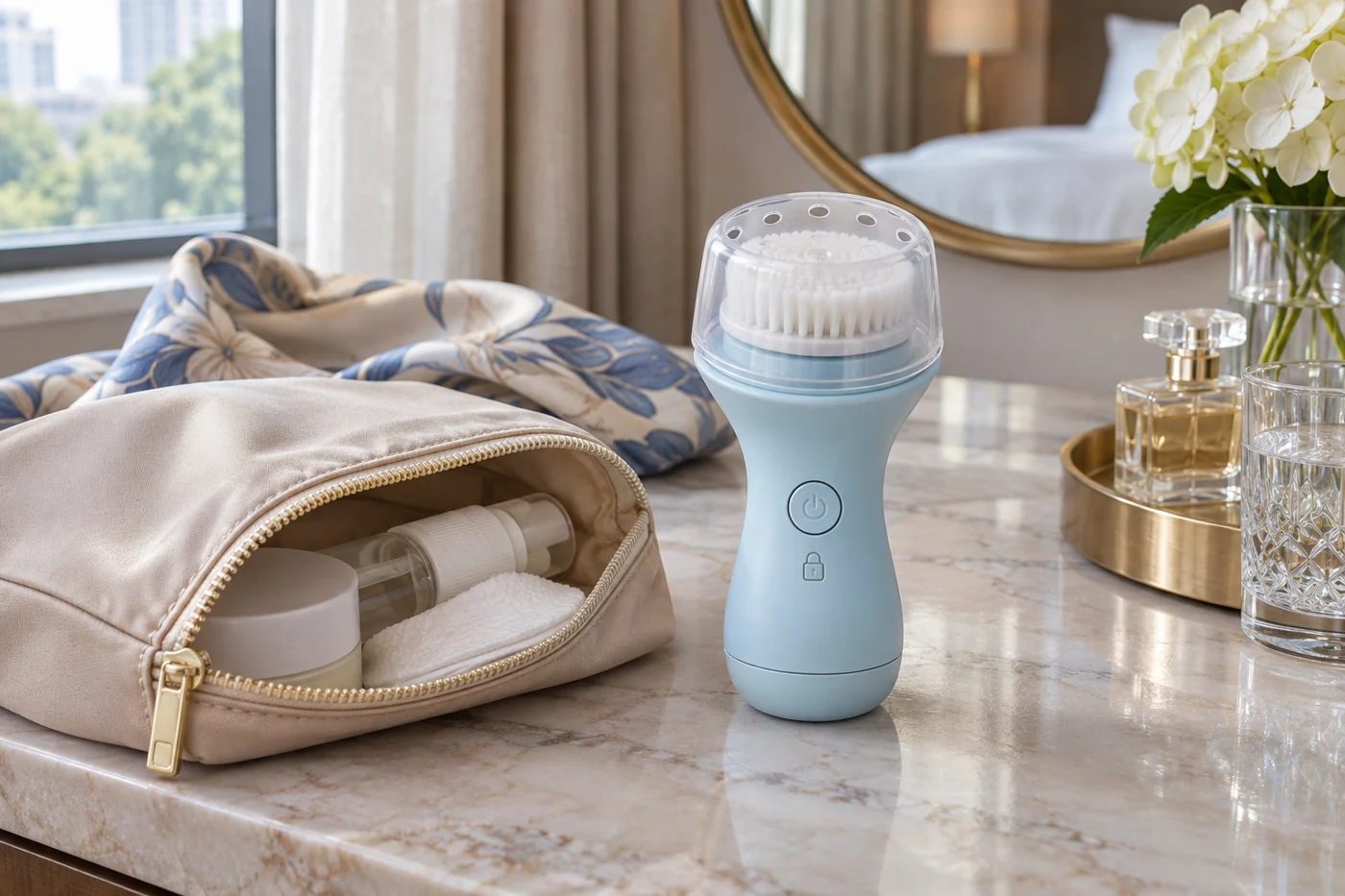
A device humming inside a suitcase is an avoidable surprise. Travel locks are designed to reduce accidental activation, but they are not always obvious from the outside. Learn how your model locks and unlocks before a trip, and check the confirming signal described in its instructions.
A protective cap does a different job. It may cover a brush head, contact surface, or connector, but it does not necessarily stop the power button from being pressed. A fitted cover is not proof that the device is locked.
Packing begins after cleaning and the required drying time. A cap or pouch should not be used to hide a damp tool that is not ready for enclosed storage. Follow the maker's directions for each attachment, especially if a cover changes how air reaches a brush head or recess.
Think about what sits beside the device. A heavy bottle can press a button or strain a small attachment even through a soft bag. Give the tool a protected position, with detachable pieces organized so they do not scratch or knock against one another. Avoid overstuffing a case simply because it can be zipped shut.
Carry the correct charging accessories if you will need them, and check electrical and airline requirements for your journey through official sources. A travel lock does not establish that a device is permitted in every type of baggage, and a small size does not answer battery-transport questions.
On arrival, inspect the tool before use. Confirm that it is intact, unlock it as directed, and check the selected mode. If it has activated unexpectedly, become unusually warm, or suffered damage in transit, do not immediately charge or use it; follow the manufacturer's guidance.
Keep a saved copy of the manual on your phone so the lock sequence is available without an internet search. If a cap goes missing, ask for the proper replacement rather than improvising a tight covering that could damage a surface.
These features are simple when their roles stay clear: a lock addresses unintended operation, a cap protects a component, and a case helps organize transport. None replaces correct cleaning, drying, inspection, or the travel rules that apply to the device.
Continue exploring

Before Your First Facial Cleansing Device
A facial cleansing tool is an optional addition. Start with the manual, a compatible cleanser, and a plan for keeping the tool clean.
Keep reading: Before Your First Facial Cleansing Device
Silicone and Bristle Cleansing Tools: Everyday Differences
The surface material is only part of the decision. Consider drying, replacement parts, grip, and how the whole tool fits beside your sink.
Keep reading: Silicone and Bristle Cleansing Tools: Everyday Differences