Charging and Cleaning an Electric Toothbrush
Treat the washable handle, removable head, and electrical charger as different parts with different care instructions.
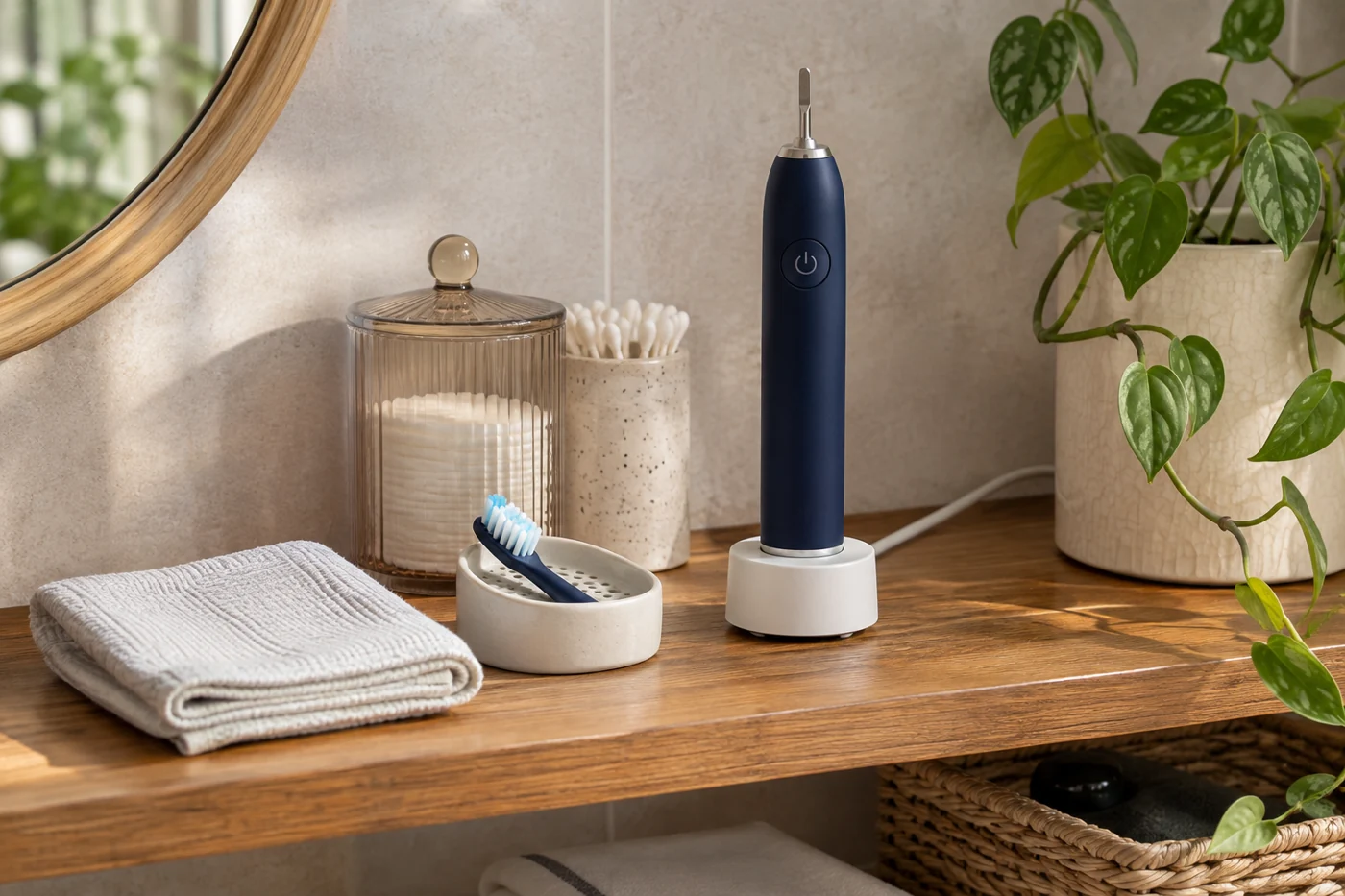
An electric toothbrush spends much of its life near water, but that does not mean every part can be cleaned in the same way. The handle, brush head, charging base, cable, and travel case may each have separate instructions. Start with the manual for the exact model rather than a general cleaning video.
Identify which parts detach during ordinary maintenance. Do not pull apart a sealed handle or pry at the battery compartment unless the manufacturer describes that as a user task. A removable brush head does not imply that the rest of the device is designed for disassembly.
Build a short after-use sequence
Rinse and clean the head and handle only as the manual permits. Pay attention to the connection area if the manufacturer tells you to remove the head for cleaning. Let components dry appropriately before returning them to their storage position.
Avoid placing electrical parts in a dishwasher, boiling water, or a disinfectant solution unless the instructions explicitly allow that method. A stronger cleaning method can damage materials or seals without making the device more useful.
Keep the charging base clean using its specified method, with the power disconnected when instructed. Check where water collects on the counter. Moving the base to a suitable stable spot may be more helpful than repeatedly wiping a puddle around it.
Use the correct charging equipment
Match the charger and power supply to the model. A connector that fits is not enough to establish electrical compatibility. If a cable or adapter is lost, obtain the correct replacement information from the manufacturer rather than guessing from an online photograph.
Follow the charging and battery-storage guidance. Some models are designed to remain on a base between uses; others have different instructions. Do not turn another device's habit into a universal rule.
Check cords, plugs, and the housing for damage. Stop using damaged charging equipment and contact the manufacturer for the appropriate next step. Keep chargers away from places where they may fall into water, following the manual's warnings.
Keep the maintenance information accessible
Save the model number, manual, and compatible-head details in one place. Photograph the label before it becomes difficult to read. This makes future support or replacement questions easier to answer.
If the brush begins behaving differently, describe the symptom precisely: no charge light, reduced running time, a loose head, or an unusual noise. Do not try to solve every fault by using an unrelated charger or opening the handle.
The aim is a repeatable care routine that respects the design of the device. Cleaning and charging should help it function as intended, not become improvised experiments around electricity and water.
Continue exploring

A Straightforward Twice-Daily Brushing Routine
Build a repeatable sequence that covers every tooth surface and fits into the beginning and end of your day.
Keep reading: A Straightforward Twice-Daily Brushing Routine
Choosing a Soft-Bristled Toothbrush
Look at head size, handle control, and a clear soft-bristle label rather than equating a firmer brush with a better clean.
Keep reading: Choosing a Soft-Bristled Toothbrush