Reading a Fluoride Toothpaste Label
Find the anticavity ingredient, directions, and intended user before focusing on flavor or whitening claims.
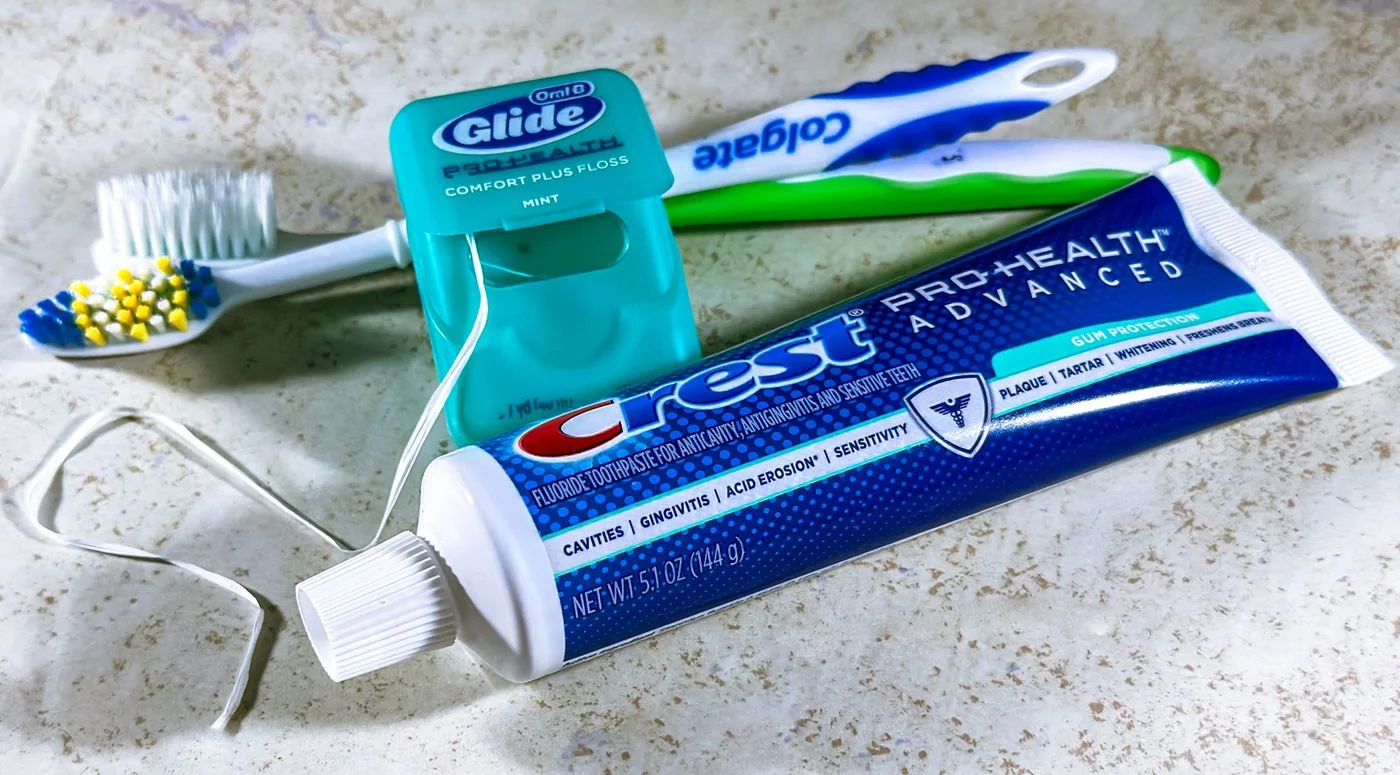
Toothpaste packaging can emphasize freshness, whitening, sensitivity, or an unusual flavor. Those details may influence preference, but they should not distract from the basic label information. Start by checking that the product is a fluoride toothpaste appropriate for the person who will use it.
The ADA's toothpaste guidance explains fluoride's role in helping protect against cavities and notes that not all toothpastes contain it. The ADA Seal of Acceptance can also help identify products evaluated against the program's relevant criteria.
Turn the tube around
Read the Drug Facts panel and directions on a US anticavity toothpaste. Identify the active ingredient, intended use, warnings, and instructions for different age groups. A child and an adult should not be assumed to use the same amount merely because a tube is marketed to a family.
If your dentist has prescribed a particular toothpaste, follow that plan rather than replacing it with a product that has a similar front-of-pack claim. Bring the tube or its details to a pharmacist or dentist if the directions are unclear.
Separate extra claims from the basic job
A whitening claim may refer to surface stain removal. A sensitivity product may have a particular active ingredient and instructions. Neither description should lead you to assume that every other product with the same word works identically.
Flavor and foaming are sensory experiences, not simple measures of cleaning effectiveness. A strong mint sensation does not establish that brushing reached every surface. Choose a flavor you can tolerate without letting it become the only criterion.
Check the full ingredient list if you have a known ingredient sensitivity. For unexplained recurring irritation, seek advice rather than repeatedly changing flavors and assuming that one unnamed additive must be responsible.
Make replacement straightforward
Record the exact name and version of a toothpaste that meets your needs. Brands often sell similar-looking tubes with different formulas. Read the current label when restocking instead of relying only on a package color or a retailer's search result.
Keep the cap closed and store the tube as directed. A travel size should retain its identification and instructions; do not mix different toothpastes into an unlabelled container to save space.
A good label-reading habit takes less time than rebuilding your oral-care routine around every new claim. Find the anticavity information and correct directions first, then choose among suitable options based on the practical preferences that help you use them consistently.
Continue exploring

A Straightforward Twice-Daily Brushing Routine
Build a repeatable sequence that covers every tooth surface and fits into the beginning and end of your day.
Keep reading: A Straightforward Twice-Daily Brushing Routine
Choosing a Soft-Bristled Toothbrush
Look at head size, handle control, and a clear soft-bristle label rather than equating a firmer brush with a better clean.
Keep reading: Choosing a Soft-Bristled Toothbrush