Electric and Manual Toothbrushes: What Matters Day to Day
Compare handling, technique, and replacement needs before deciding which type fits your routine.
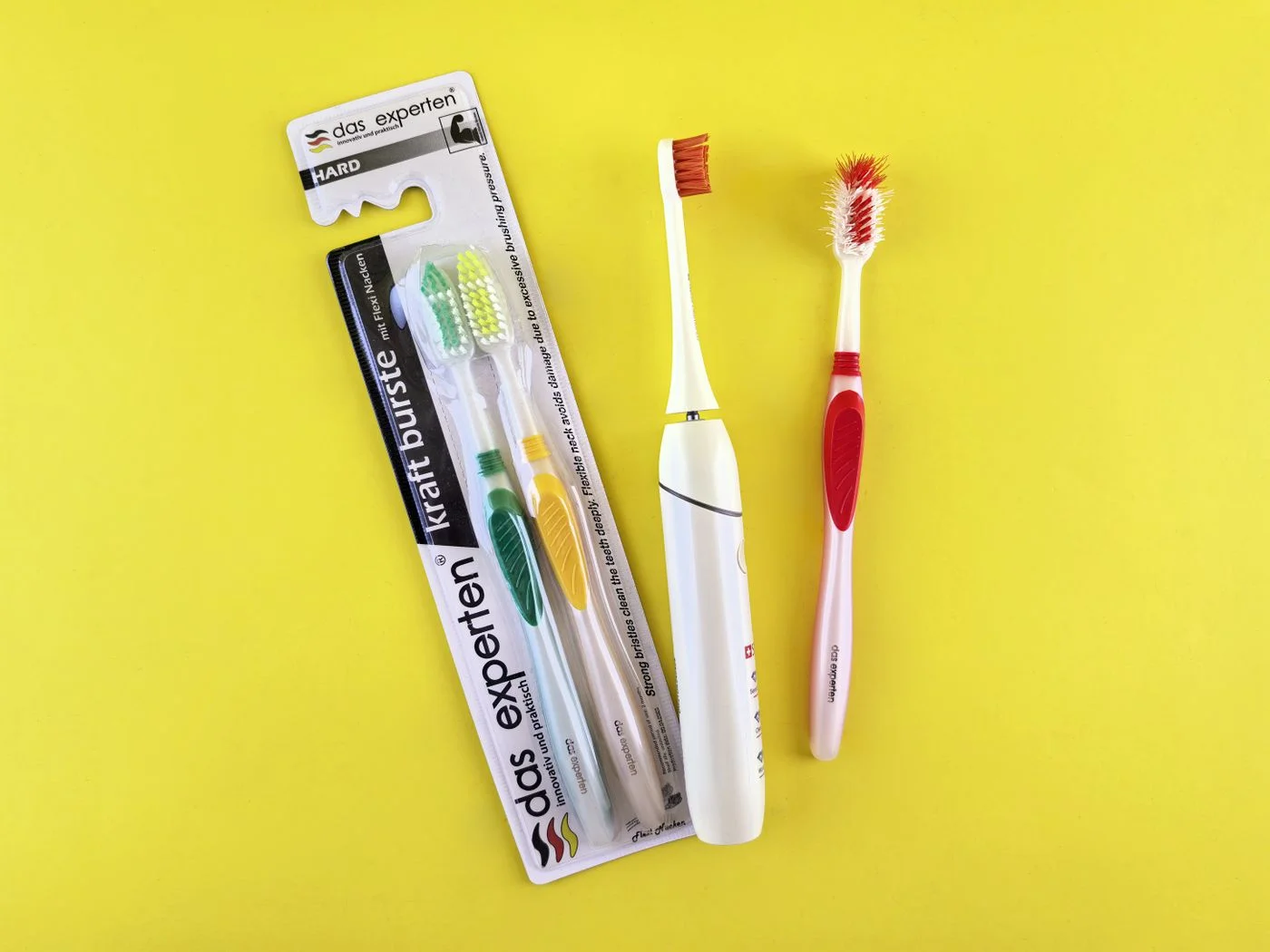
An electric toothbrush may offer a timer, pressure feedback, and several modes. A manual brush offers a familiar tool that needs no charging. Neither description tells you which one you will use effectively in the bathroom you actually have.
The ADA states that both manual and powered toothbrushes can be used effectively. The choice should account for the person using the brush, including dexterity, comfort, and any advice from a dental professional.
Compare the movement you need to make
A powered brush has its own instructions for positioning and movement. Do not assume that the motor simply adds power to the same vigorous scrubbing action you used before. Read the manual and ask for a demonstration if the technique is unclear.
A manual brush still requires deliberate access to every surface. A familiar tool can be convenient, but familiarity does not prove that technique is complete. If your dentist identifies a consistently missed area, discuss how to reach it with the brush you choose.
Handle size and grip can be decisive. Some powered handles are easier to hold; others feel heavy or bulky. A manual brush may be easier to pack, while a modified handle may help someone with grip difficulties. Test the practical handling when possible instead of deciding entirely from the feature list.
Look at the whole ownership routine
An electric handle needs compatible replacement heads and the correct charging equipment. Find out what those cost and whether they are easy to obtain. Check whether the brush can operate normally without an app if you do not want a phone involved in brushing.
A manual brush avoids those requirements, but still needs suitable storage and regular replacement. A low purchase price does not justify keeping a worn brush indefinitely.
For travel, consider the length of the trip, the protective case, and the manufacturer's charging guidance. Do not assume that every cable with a matching connector is suitable for the device.
Choose the feature that solves your problem
If you routinely stop too soon, a timer may be useful. If you press hard, feedback may help you notice that habit. If the real difficulty is reaching a particular area, a new mode name may do little without better technique.
Make the decision with a clear question: what will this brush make easier for me to do correctly? A dentist or hygienist can help connect the answer to your mouth and circumstances. The goal is effective daily care, not proving that one type of brush is universally superior.
Continue exploring

A Straightforward Twice-Daily Brushing Routine
Build a repeatable sequence that covers every tooth surface and fits into the beginning and end of your day.
Keep reading: A Straightforward Twice-Daily Brushing Routine
Choosing a Soft-Bristled Toothbrush
Look at head size, handle control, and a clear soft-bristle label rather than equating a firmer brush with a better clean.
Keep reading: Choosing a Soft-Bristled Toothbrush