Making Space for Daily Between-Teeth Cleaning
Give the tool and the time a clear place in your day so the step is less likely to become an afterthought.
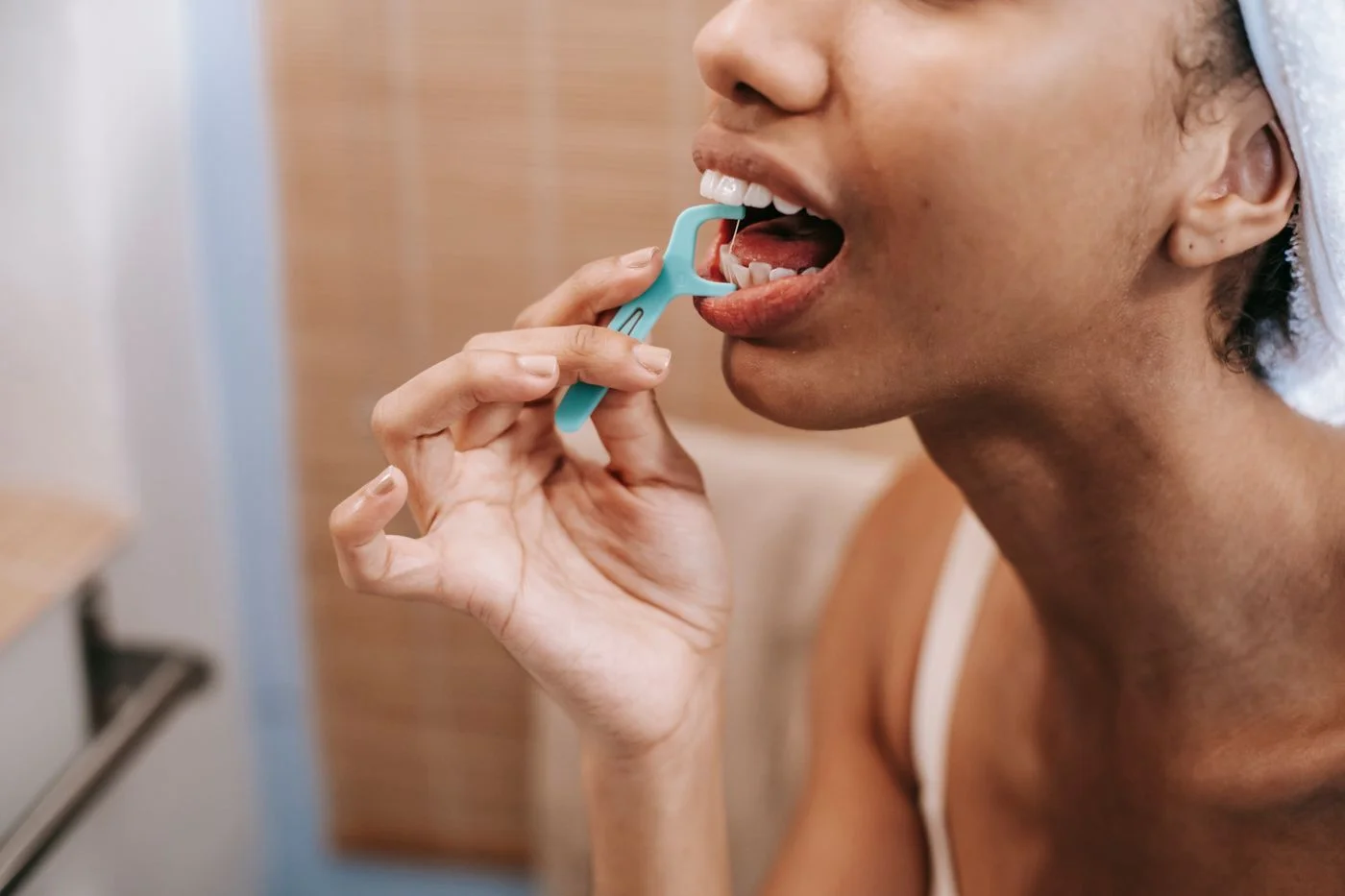
Between-teeth cleaning often gets left until the end of a routine, when you are already ready to leave the bathroom. A packet hidden behind several bottles is easy to forget. A small change in placement can make the task more visible without adding a complicated reminder system.
The ADA recommends cleaning between teeth daily with floss or another appropriate interdental cleaner. Your dentist or hygienist can help choose a tool that fits your mouth and demonstrate how to use it.
Choose a time you can repeat
The best place in the day is one you can maintain. Some people prefer the evening; others find an earlier moment easier. The ADA notes that either brushing or interdental cleaning can come first when both are done thoroughly. Follow individual advice if you have been given a specific plan.
Put the tool where you can reach it before you start. Keep supplies clean and separate from used items. If you need more than one brush size or a special aid, label the storage clearly so you do not have to reconstruct the instructions each time.
Solve the difficulty you actually have
If floss is hard to hold, explain that rather than simply concluding that you cannot clean between your teeth. A different aid or technique may be more manageable. If a brush will not fit, do not force it through; ask for guidance on sizing and alternatives.
A water flosser may be one option for some people, but it brings its own instructions, space requirements, and cleaning routine. Choose it because it addresses a need, not because another device necessarily makes the routine more complete.
Keep a small replenishment note when supplies run low. Buying an unfamiliar substitute in a hurry can be frustrating if it does not match the tool you were shown how to use.
Ask for a demonstration when needed
At a dental visit, describe the exact area or movement you find difficult. You can ask the professional to watch you try the technique rather than only describing it. A few clear instructions are more valuable than a drawer of tools you are unsure how to use.
Regular bleeding, pain, or other concerns deserve dental advice. Do not assume that discomfort means you should permanently skip the area or use more force.
The task becomes easier to remember when it has a clear tool, a clear location, and a realistic time. Organization supports the habit; appropriate technique makes the habit worthwhile.
Continue exploring

A Straightforward Twice-Daily Brushing Routine
Build a repeatable sequence that covers every tooth surface and fits into the beginning and end of your day.
Keep reading: A Straightforward Twice-Daily Brushing Routine
Choosing a Soft-Bristled Toothbrush
Look at head size, handle control, and a clear soft-bristle label rather than equating a firmer brush with a better clean.
Keep reading: Choosing a Soft-Bristled Toothbrush