Water Flossers: Where They Fit in Oral Care
Understand the intended job, countertop requirements, and cleaning routine before adding a water flosser.
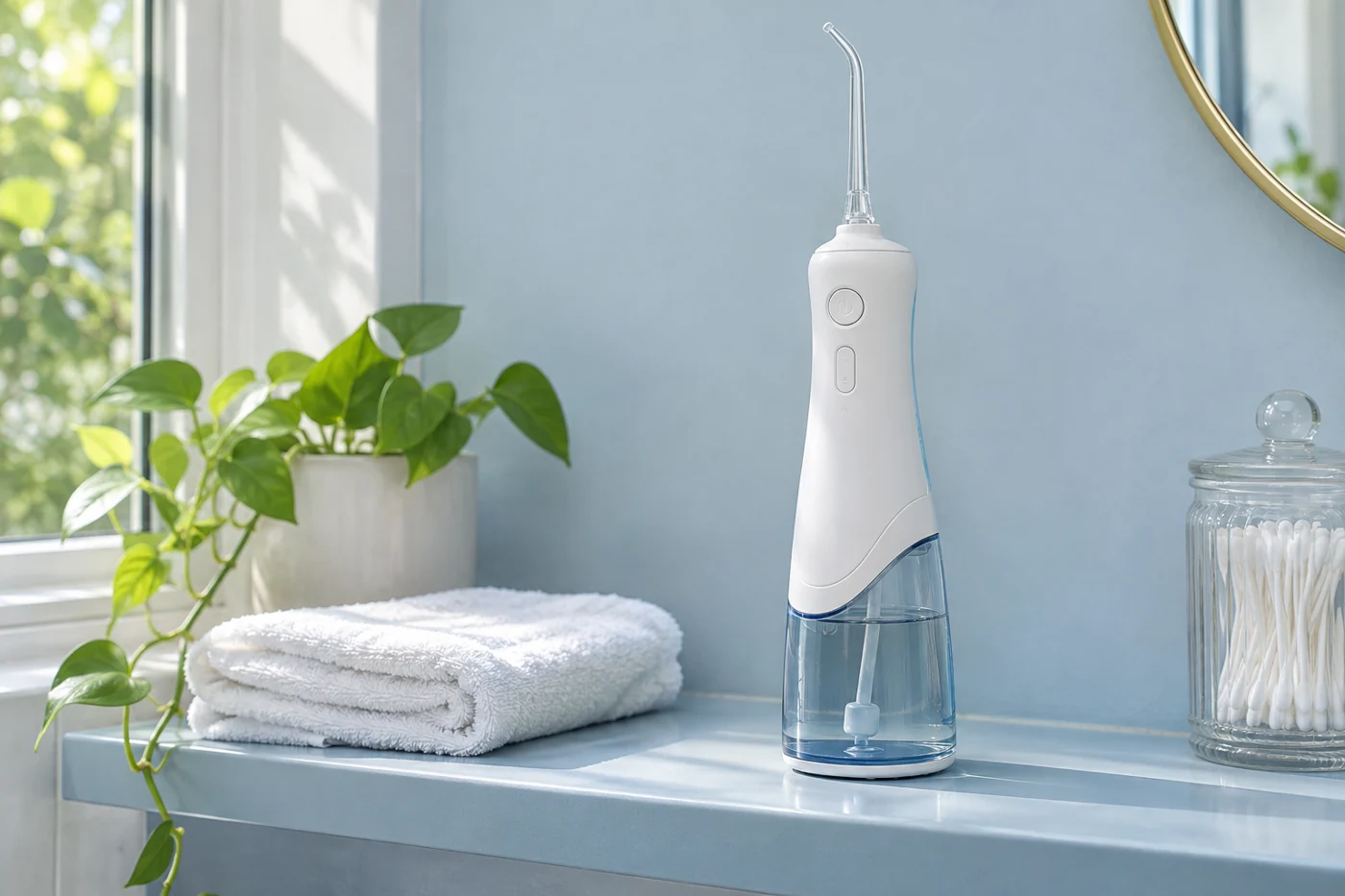
A water flosser uses a directed stream of water to clean around and between teeth. It can be appealing when handling string floss is difficult, but buying one does not automatically resolve every oral-care task. It still needs an appropriate technique and a place in the daily routine.
The ADA describes water flossers as an option for some people who find hand flossing difficult, including some with dental work that complicates access. Products carrying the ADA Seal have been evaluated for the relevant claims. Ask your dental professional whether a water flosser is suitable for your needs and how it should be used.
Check the setup before the features
A countertop model needs room for its base, reservoir, and hose. A cordless model still needs filling, drying, and appropriate charging. Measure the space near your sink and consider where clean tips will be stored without mixing them with someone else's.
Read the manual for the exact liquids permitted, pressure settings, tip selection, and cleaning instructions. Do not put mouthwash or another solution in the reservoir simply because it is safe to use in your mouth; the device may have different material and maintenance requirements.
Start with the method the manufacturer and your dental professional recommend. Higher pressure is not a competition. If a tip is intended for a specific purpose, learn how to use it rather than treating every attachment as interchangeable.
Plan for maintenance
The reservoir and tip need attention after use. Find out which components can be removed, which can be washed, and how they should dry. Do not assume that an electrical base can be immersed because another part is washable.
Check the cost and availability of replacement tips. If several people use a shared handle or base where the manufacturer permits it, each person should have their own identified tip and an appropriate storage arrangement.
Travel can change the decision. A large countertop appliance may be inconvenient for frequent nights away, while a small reservoir may need refilling during use. These are practical tradeoffs to consider, not proof that one format is superior.
Keep the rest of care intact
A water flosser does not replace brushing with fluoride toothpaste or dental visits. It also should not be used to postpone getting help for persistent bleeding, pain, or other symptoms.
After a short period of ordinary use, review whether the device makes the recommended routine easier to follow. If the filling, charging, and cleaning lead you to avoid it, discuss another approach. The useful tool is the one that supports effective care in your real bathroom, rather than the one with the most impressive list of pressure modes.
Continue exploring

A Straightforward Twice-Daily Brushing Routine
Build a repeatable sequence that covers every tooth surface and fits into the beginning and end of your day.
Keep reading: A Straightforward Twice-Daily Brushing Routine
Choosing a Soft-Bristled Toothbrush
Look at head size, handle control, and a clear soft-bristle label rather than equating a firmer brush with a better clean.
Keep reading: Choosing a Soft-Bristled Toothbrush